The Intersection of GRC and Artificial Intelligence for Risk Prediction
Risk management has evolved significantly in recent years. Organizations no longer face only traditional threats related to operations, compliance, or technology, but also emerging risks driven by digital transformation, the increase in cyberattacks, and growing regulatory complexity.
In this context, Governance, Risk, and Compliance (GRC) programs have become a fundamental component for ensuring business stability and continuity. However, traditional risk management approaches are often reactive, identifying threats only after they have already begun to impact the organization.
Artificial Intelligence (AI) is changing this paradigm by enabling organizations to anticipate potential risk scenarios through the analysis of large volumes of data, pattern recognition, and more accurate predictive insights.
What is GRC and Why is it Important?
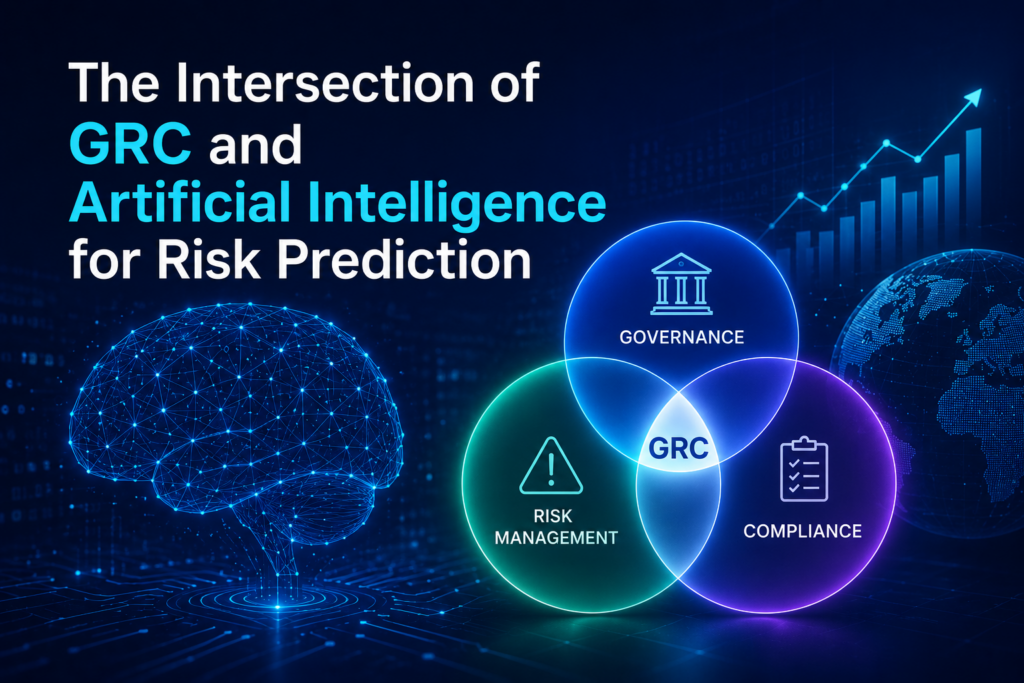
The concept of GRC integrates three fundamental pillars:
- Governance: Establishes the policies, processes, and organizational structures that align the company with its strategic objectives.
- Risk Management: Identifies, assesses, and manages threats that may impact the business.
- Compliance: Ensures adherence to applicable regulations, standards, and legal requirements.
When these three elements operate in an integrated manner, organizations can make better-informed decisions, reduce potential losses, and strengthen the confidence of customers, partners, and investors.
The Challenge of Traditional Risk Management
Many organizations still rely on manual processes to identify and assess risks. This approach often presents several limitations:
- Analysis based on limited historical information.
- Assessments performed periodically rather than continuously.
- Excessive dependence on human judgment.
- Difficulty identifying emerging risks.
- Slow response to environmental and business changes.
In a world where threats continuously evolve, these limitations can result in financial losses, regulatory non-compliance, or security incidents.
How Artificial Intelligence is Transforming Risk Management
Artificial Intelligence enables organizations to analyze vast amounts of data from both internal and external sources to identify patterns that may go unnoticed by human analysts.
Early Risk Identification
AI algorithms can detect anomalies and trends that may indicate the emergence of new operational, financial, or cybersecurity risks before they materialize.
Predictive Analytics
AI can leverage historical data and current variables to estimate the likelihood of specific events, supporting proactive decision-making and risk mitigation strategies.
Continuous Monitoring
Unlike traditional periodic assessments, AI-powered solutions can monitor risks in real time and generate immediate alerts when significant deviations or threats are detected.
Automated Risk Assessments
AI-driven platforms can significantly reduce the time required to classify, prioritize, and document risks within GRC processes.
AI Use Cases in GRC Programs
Intelligent Regulatory Compliance
AI can analyze regulatory changes and automatically compare them against internal policies and controls, helping organizations identify potential compliance gaps.
Third-Party Risk Management
Organizations can continuously evaluate vendors and business partners using public information, financial indicators, and reported security events.
Fraud Detection
Machine learning models can identify suspicious transactions and behaviors that may indicate fraudulent activities.
Cybersecurity Risk Management
The combination of GRC and AI enables organizations to correlate security events, vulnerabilities, emerging threats, and operational data to anticipate potential incidents.
Benefits for Organizations
Integrating Artificial Intelligence into GRC programs offers numerous advantages:
- Greater accuracy in risk identification.
- Reduction of false positives.
- Improved prioritization of critical threats.
- Faster incident response.
- Optimization of human and technological resources.
- Stronger regulatory compliance.
- Enhanced ability to make strategic, data-driven decisions.
Additionally, predictive capabilities allow organizations to shift from reactive risk management to a proactive risk management model.
Important Considerations
Although Artificial Intelligence offers significant benefits, its implementation must be carried out responsibly.
Organizations should ensure:
- High-quality and reliable data sources.
- Transparency in AI models and decision-making processes.
- Human oversight for critical decisions.
- Protection of privacy and data confidentiality.
- Compliance with regulations and frameworks governing AI usage.
Technology should complement the expertise of risk management professionals rather than completely replace it.
Is Your Organization Ready for Smarter Risk Management?
At Hacking Mode, we help organizations strengthen their Governance, Risk, and Compliance (GRC) https://hackingmode.com/grc/ programs through strategic assessments, consulting services, and solutions designed to identify, manage, and reduce risks effectively.
The combination of GRC methodologies and emerging technologies provides a more comprehensive approach to protecting your organization’s most valuable assets.
🌎 GLOBAL ATTENTION & COVERAGE
📞 Phone / WhatsApp:
- 🇲🇽 MX: +52 1 55 5550 5537
- 🇺🇸 USA: +1 (918) 540-9341
📧 Email Support & Sales:
🌐 We provide immediate attention, strategic consulting, and deployment of Security Compliance Specialists and Cybersecurity Experts across the entire Americas, ensuring business continuity in the main markets of:
- 🇺🇸 Estados Unidos: Miami, Houston, New York, San Francisco, Los Angeles, entre otras.
- 🇲🇽 México: México City (CDMX), Monterrey, Guadalajara, Querétaro, Tijuana (Cobertura Nacional).
- 🇬🇹 Guatemala: Guatemala City, Quetzaltenango, Escuintla, Antigua Guatemala (Cobertura Nacional).
🌎 Latinoamérica: Bogota, Medellin, Lima, Santiago de Chile, Buenos Aires, Sao Paulo, Panama City, serving the entire region.
Tags
#GRC #RiskManagement #ArtificialIntelligence #PredictiveAnalytics #CyberRisk #Compliance #Governance #RiskPrediction #Cybersecurity #AI