Physical Security: The Forgotten Attack Vector
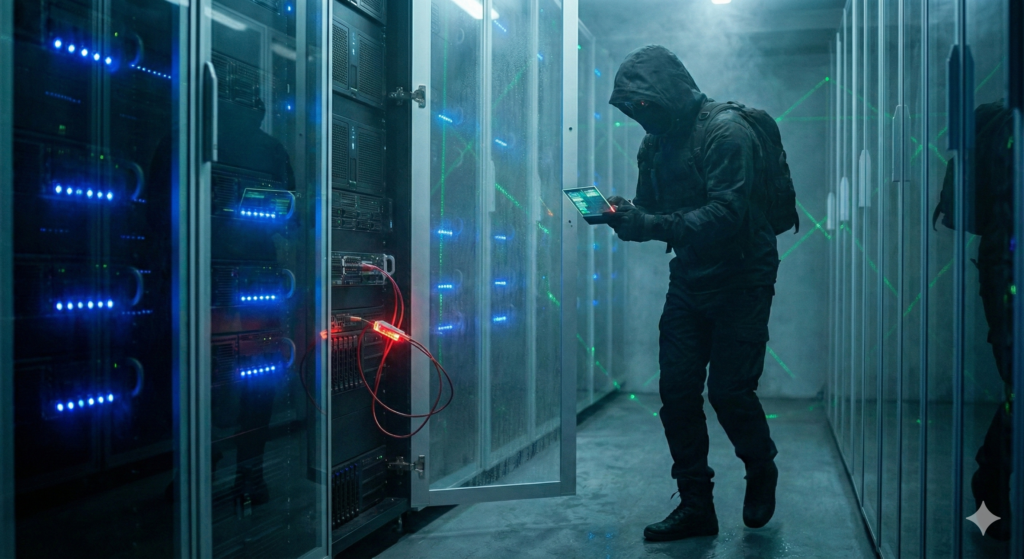
In the era of AI and the cloud, we have fallen into a dangerous trap: obsessing over protecting port 443 while leaving the server room door unlocked. We spend million-dollar budgets on next-gen firewalls but forget that if an attacker gains physical access to the device, logical security is irrelevant.
A physical security audit is not about checking if fire extinguishers work. It is evaluating if a stranger can walk into your offices dressed as a delivery person, connect a “rogue” device to your internal network, and exfiltrate your entire database before your SOC receives the first alert. In 2026, the most effective hacking sometimes doesn’t require a single line of code, just a reflective vest and a lot of confidence.
The Problem in Brief
Companies build digital fortresses on paper-thin physical foundations. The main risk is the disconnect between the Cybersecurity team and Physical Security/Facilities.
A physical attacker doesn’t need to break 256-bit cryptography; they just need to “tailgate” (slip in behind an employee) to cross the turnstiles. Once inside, access to confidential documents on printers, passwords written on sticky notes, or active network ports turns your office into a free data buffet. The consequence is a total breach that no antivirus can stop.
The Solution: Physical Hacking & Red Teaming
To close these gaps, you need to think like an intruder who is physically there. The solution is to subject your facilities to tangible intrusion tests.
1. Simulated Physical Intrusion
Our specialists in Physical Security attempt to access restricted zones (Data Centers, executive offices) using RFID card cloning techniques, lockpicking, and camera evasion. The goal is to demonstrate how far an unauthorized person can get before being stopped.
2. On-Site Social Engineering
The “human firewall” often fails in the face of kindness or urgency. We combine intrusion with Ransomware & Social Eng techniques, testing if your receptionists or security guards allow passage to fake “tech support” personnel. We validate if your staff challenges strangers or holds the door for them.
3. Planting Rogue Devices
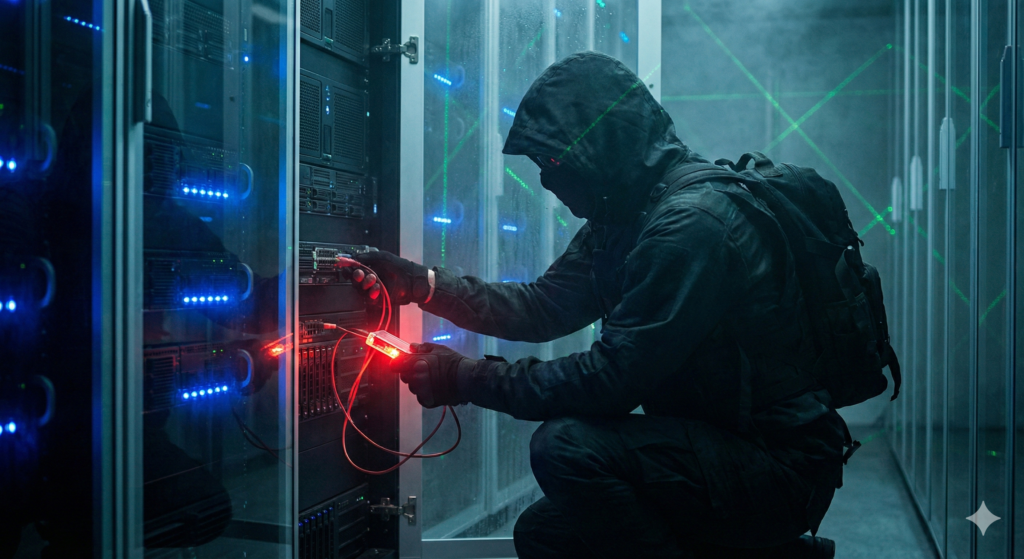
Once inside, the attacker connects malicious hardware (like a Pineapple or physical Keylogger). Part of our Pentesting includes verifying if your network ports are protected (NAC) and if your security team detects the connection of unauthorized hardware in real-time.
Conclusion
Cybersecurity doesn’t end at the screen. A permeable physical perimeter nullifies any investment in software. Do not assume your building is secure just because there is a guard at the entrance.
The only way to know if your assets are protected is to try to steal them (ethically). Close the back door before someone walks in without knocking.
👉 TEST YOUR SECURITY BEFORE HACKERS DO. SCHEDULE YOUR PENTEST.
🌎 GLOBAL ATTENTION & COVERAGE
📞 Phone / WhatsApp:
- 🇲🇽 MX: +52 1 55 5550 5537
- 🇺🇸 USA: +1 (918) 540-9341
📧 Email Support & Sales:
🌐 Global Coverage & Service Locations We provide immediate attention, strategic consulting, and deployment of Security Compliance Specialists and Cybersecurity Experts across the entire Americas, ensuring business continuity in the main markets of:
- 🇺🇸 United States: Miami, Houston, New York, San Francisco, Los Angeles, among others.
- 🇲🇽 Mexico: Mexico City (CDMX), Monterrey, Guadalajara, Queretaro, Tijuana (Nationwide Coverage).
- 🇬🇹 Guatemala: Guatemala City, Quetzaltenango, Escuintla, Antigua Guatemala (Nationwide Coverage).
- 🌎 Latin America: Bogota, Medellin, Lima, Santiago de Chile, Buenos Aires, Sao Paulo, Panama City, serving the entire region.
Tags: #HackingMode #Cybersecurity #SecurityCompliance #HackingRED #Pentesting2026