Mobile App Hacking: Critical Risks in iOS and Android

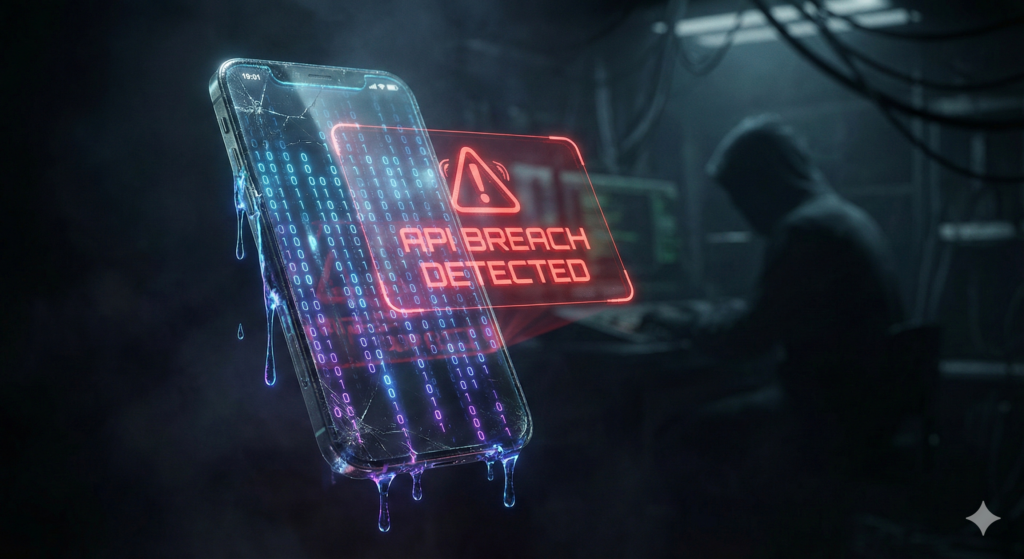
In 2026, the mobile phone is no longer just a communication device; it is your customer’s digital vault and a direct backdoor to your corporate infrastructure. While many companies spend millions on perimeter firewalls, they often leave the API powering their mobile application exposed, creating a perfect tunnel for attackers.
Believing that “iOS is invulnerable” or that “Android is isolated” is a dangerous myth. The reality is that mobile app security is the fastest-growing attack vector, especially in customer service channels where sensitive data is processed in real-time.
If your application handles transactions or personal data and hasn’t been offensively tested this year, you don’t have an app; you have a pocket-sized vulnerability.
The Problem in Brief
Agile development prioritizes functionality over security. This results in applications hitting the market with hardcoded credentials, lack of code obfuscation, and insecure local data storage.
The real pain for the client is not just data theft, but service interruption and irreversible reputational damage. An attacker doesn’t need to steal the physical phone; they only need to intercept the communication between the app and your servers using Man-in-the-Middle techniques or reverse engineering. The uncertainty of whether your systems would withstand a real attack today is the main trigger for action.+1
The Solution: Offensive Mobile Security
To armor this environment, an automated scan is not enough. You need a manual and exhaustive Pentesting strategy focused on business logic and the specific architecture of each operating system.
1. API & Backend Audit
The app is just the interface; the real treasure lies in the server. We conduct an Attack Surface Analysis to identify exposed endpoints, broken authentication, and excessive data exposure that automated tools often miss. If your API blindly trusts the app, you are already compromised.
2. Reverse Engineering (Android/iOS)
We simulate a cybercriminal downloading your app to decompile it. We evaluate the binary code’s resistance against manipulation and verify if it’s possible to inject malicious code or extract cryptographic keys. In this scenario, Hardening and rigorous testing are vital to understanding how easy it is for a third party to clone or modify your application.
3. The Human Factor in Mobile
Mobile phones are personal devices prone to carelessness. A common vector is the attack directed at the end-user. We evaluate how your application reacts to Ransomware & Social Engineering attempts, ensuring that even if the user’s device is compromised, your company’s data remains isolated and secure.
Conclusion
Mobile security is not an additional “feature”; it is the foundation of digital trust in 2026. A breach in your application is a breach in your business. Do not wait for a user to report identity theft to react.
Adopt an offensive posture. Identify gaps before criminals do through controlled attack simulation.
👉 TEST YOUR SECURITY BEFORE HACKERS DO. SCHEDULE YOUR PENTEST.
🌎 GLOBAL ATTENTION & COVERAGE
📞 Phone / WhatsApp:
- 🇲🇽 MX: +52 1 55 5550 5537
- 🇺🇸 USA: +1 (918) 540-9341
📧 Email Support & Sales:
🌐 Global Coverage & Service Locations We provide immediate attention, strategic consulting, and deployment of Security Compliance Specialists and Cybersecurity Experts across the entire Americas, ensuring business continuity in the main markets of:
- 🇺🇸 United States: Miami, Houston, New York, San Francisco, Los Angeles, among others.
- 🇲🇽 Mexico: Mexico City (CDMX), Monterrey, Guadalajara, Queretaro, Tijuana (Nationwide Coverage).
- 🇬🇹 Guatemala: Guatemala City, Quetzaltenango, Escuintla, Antigua Guatemala (Nationwide Coverage).
- 🌎 Latin America: Bogota, Medellin, Lima, Santiago de Chile, Buenos Aires, Sao Paulo, Panama City, serving the entire region.
Tags: #HackingMode #Cybersecurity #SecurityCompliance #HackingRED #Pentesting2026